

27 November - 1 December 2023 - The Academy in Advanced Legal Research and Method (virtual)
Convened by the Transnational Association of Legal Scholars

Call for Applications
27 November - 1 December, Live Online
Applications due on 28 July 2023
Participants advised by 17 August 2023
The Transnational Association of Legal Scholars (TALS) is a group of legal scholars established in 2023, experienced in research, supervision, and interested in the conduct and method of research in law.
This year, the LPGCIL will auspice and host the inaugural virtual TALS Academy for research training and method in law. Our goal is to provide a short period of intensive training to a carefully selected group of 16 graduate students and early career legal researchers in the legal academic activities of research writing, careful reading, and effective academic communication. The focus will be on method, practical training and the cultivation of an ethos, rather than on providing schematic and critical overviews of different theories and approaches that currently constitute the field of legal research. Studying the membership of TALS will give applicants a sense of the general orientation of the Faculty. The workshop will be wholly online, and live (meaning synchronous, not recorded).
Dates and Times
The virtual workshop will run during the week of 27 November - 1 December 2023 (Australian dates). Over that week, it will run for 16-18 hours. The final schedule will be determined after selection, and based on the location of participants and faculty. The Program will be available in a timely manner and participants are expected to attend the full program.
Faculty
Core faculty will be drawn from the membership of the Transnational Association of Legal Scholars.
The Program
The workshop will comprise four components:
Writing Lab in which participants will give and receive feedback on each other’s work, and receive individual feedback from faculty, and general feedback from a select group of participants.
Skills presentations on academic craft and skills, delivered by faculty.
Surgeries in which faculty members will work with small groups of participants to talk with them about their individual questions about craft, research, careers and cognate matters.
Design Lab sessions conducted through sustained engagement with the basic architecture and design of a particular work in progress of a faculty member, and through it, a specific field of law. The Design Lab sessions will act as a companion exercise to the Writing Lab for the participants. In 2023, this will have a particular focus on Global Corporations and International Law.
The virtual workshop will be conducted over 4 days and have a daily duration of 4 - 4 ½ hours (with a short general virtual catch-up/mixing organised for the end of each day). That means participants must commit to 16 -18 hours in total over the week. Partial attendance is not permitted. Participants must also ensure that they have the necessary access to internet facilities in place before the workshop.
Available Expertise
The Academy will draw upon the expertise and interests of TALS.This expertise includes several years of research mentoring, organising, and participating in research writing workshops, organising reading groups to develop student reading skills, and important contributions towards influencing/forming the practical engagements with research methods in the international legal field.
Fees & Scholarships
A large number of scholarships are available which will fully cover the workshop fee. Scholarship recipients will be asked to undertake one or two tasks after the workshop. These tasks will involve sharing the techniques learned with their peers at home, and reporting back to the Academy. Without a scholarship, the full fee for attendance at the Virtual Academy is $1000 AUD. We encourage PhD students based in the Global North to ask if their institution can cover all or part of their fees. Anyone who wishes to be considered for a scholarship may select the relevant box in the application form. All participants, including scholarship recipients, are expected to attend the whole workshop and must commit to doing so as part of the application.
Application Process
To apply, please fill in this form. The form asks for a document which includes:
- 250 words on why you want to attend the Academy
- a short CV (maximum 3 pages)
- name and contact details for one academic referee
- If you would like to be considered for a full or partial scholarship, up to 350 words on your funding situation and why you would like to be considered for a scholarship and one or two ideas on how you might carry forward the ethos of the workshop to your scholarly community
Preference will be given to legal scholars and doctoral students based in Universities in the Global South.

19 - 20 November 2023 - Corporations and Development: Then and Now
Workshop
19 & 20 October 2023
Osgoode Hall Law School
This invitational workshop will centre on a critical and historical engagement with companies, corporations and development and its precursors. It will include conversations with authors Philip Girard, one of Canada’s foremost legal historians, and Philip Stern, author of Empire Incorporated.
Organised by Ruth Buchanan (Osgoode), Dan Danielsen (Northeastern), Jason Jackson (MIT) and Sundhya Pahuja (Melbourne Law School), supported by Osgoode Hall Law School, with the additional support of the Laureate Program in Global Corporations and International Law.

2 November 2023 - AI in the New Corporate Anatomy (Recording Available)
2 November 2023, 2-3 PM
Room 223
Melbourne Law School

Image source: Wikimedia Commons
Beehive Seminar.
AI in the New Corporate Anatomy
Legal concepts of “Algorithmic accountability” have imposed trivial obligations on firms’ use of AI and automated decision-systems for some time. But these requirements are about to be eclipsed by sui generis AI regulation operating on two registers: the product and the supply chain. As strategies for product and supply chain regulation come more clearly into view, the idea of firm-level accountability becomes increasingly incoherent as responsibility for how systems function and how they are made is shifted elsewhere. Obligations on organisations and firms are replaced by requirements around specific technical capacities and inputs that exist beyond firms’ control.
At the same time, the most useful frame for understanding the question of ‘what is AI?’ - remains the corporation. By this I do not mean to invoke how the corporate structure already models AI as a non-human site of legal personality or decision-making process. Rather, I mean that the organisation, in the way it operationalises AI for specific purposes, is the most coherent way to understand AI as a sociotechnical system.
One way to move through this contradiction is to remap the concept of the firm through its interaction with the political economy of AI. The talk will identify how both the ‘product’ and ‘supply chain’ dimensions of AI, including the intellectual techniques they draw on and the networks of people they coordinate, alter our understanding of firms and organisations, and highlight how the question of AI regulation might best be understood as a question of industrial organisation.

13 September 2023 - International Law as a Set of Narratives
13 September 2023, 1-2 PM
Room 610
Melbourne Law School

Image source: Wikimedia Commons
Brown Bag Seminar. International Law as a Set of Narratives
‘International Law as a Set of Narratives’ proposes a new approach to conceptualising international law. International law can be defined in several ways: as rules, processes, practices …many other approaches can be put forward. This book will construe international as a set of narratives and will concentrate on the production of meaning in international legal scholarship. In my argument, the production of meaning is a narrativisation process in which scholars create links between facts that do not have a meaning on their own. In an effort to explain how international lawyers create coherent stories and generate meaning in their writing, the book will identify elements that are instrumental in building a narrative. By bringing these narrativisation elements to light, the book will demonstrate how international law scholars create new necessary causalities between historical events, legal sources, doctrines, judgments and international practice to create meaning in a text and advance an argument.

4 September 2023 - Sovereignty and the Economy in the Founding of America's Postwar Order (Recording Available)
4 September 2023 (AEST), 9:00 - 10:00 am, Virtual
"Sovereignty & the Economy in the Founding of America's Postwar Order"
Professor Afroditi Giovanopoulou (Florida State University).
In the early twentieth century, intense contests over power and authority in the United States caused significant transformations in the way that the international category of sovereignty was perceived. This questioning of state power took place in two distinct contexts: the “labor question,” on the one hand, and the legal management of settler colonialism and empire, on the other. This interplay between the legal pluralism of empire and that of industrial relations, both of which portrayed sovereign authority as diffuse, malleable and pluralistic, informed the founding of our current international order at the end of World War II. Much like property, mid-century New Deal lawyers rebranded sovereignty as a flexible building block that was open to international regulation. In their efforts to bring about social and economic change, however, early twentieth century jurists had expressed a bifurcated approach toward the state. They promoted more pluralistic arrangements within civil society, antagonistic to the authority of the state, and, at the same time, greater bureaucratic efficiency and centralization. New Deal lawyers mirrored this bifurcated approach in their designs for postwar peace: they institutionalized a consolidated, centralized, executive “warfare” state at home alongside more diffuse and experimental sovereign arrangements abroad. In the domain of the economy, they maintained a deformalized approach to sovereignty but abandoned the earlier, concomitant agenda for social and economic justice. Torn between fidelity to a strong executive state and to a pluralist international society, and reduced to a “compensatory” economic vision, the postwar settlement carried within it a series of compromises that we encounter to this day.

Image: President Roosevelt departs Washington on a voyage that includes urging support of New Deal candidates in upcoming elections. July 7 1938. Source: Library of Congress

24 August 2023 - TASC: Applying for grants for law and humanities research.
Featured Guests: Tim Peters and Sundhya Pahuja
1:00 - 2:00 pm
24 August 2023
Virtual
Register here
A collaboration between IILAH, the UNSW Critique Network of Professor Ben Golder, and La Trobe International and Comparative Law Cluster co-led by Dr Kathleen Birrell.
The ‘Skills Circle’ is modelled on the knitting circle, which brings knitters of all levels of experience together into a room to knit, and while they do so, to share ideas and techniques, and to experience the camaraderie of a shared activity. The skills circle will be held monthly on Thursdays during the Australian teaching term at either 1pm (AEST), or 8am (AEST) to accommodate international guests.

17 August 2023 - 'Artificial Intelligence, Instrumental Cause and Corporate Personhood: A Political Theology of Corporate Technology' with Timothy D Peters
August 17 2023, 1-2pm
MLS Boardroom, enter via Level 9
RSVP by Friday 11 August. Register here
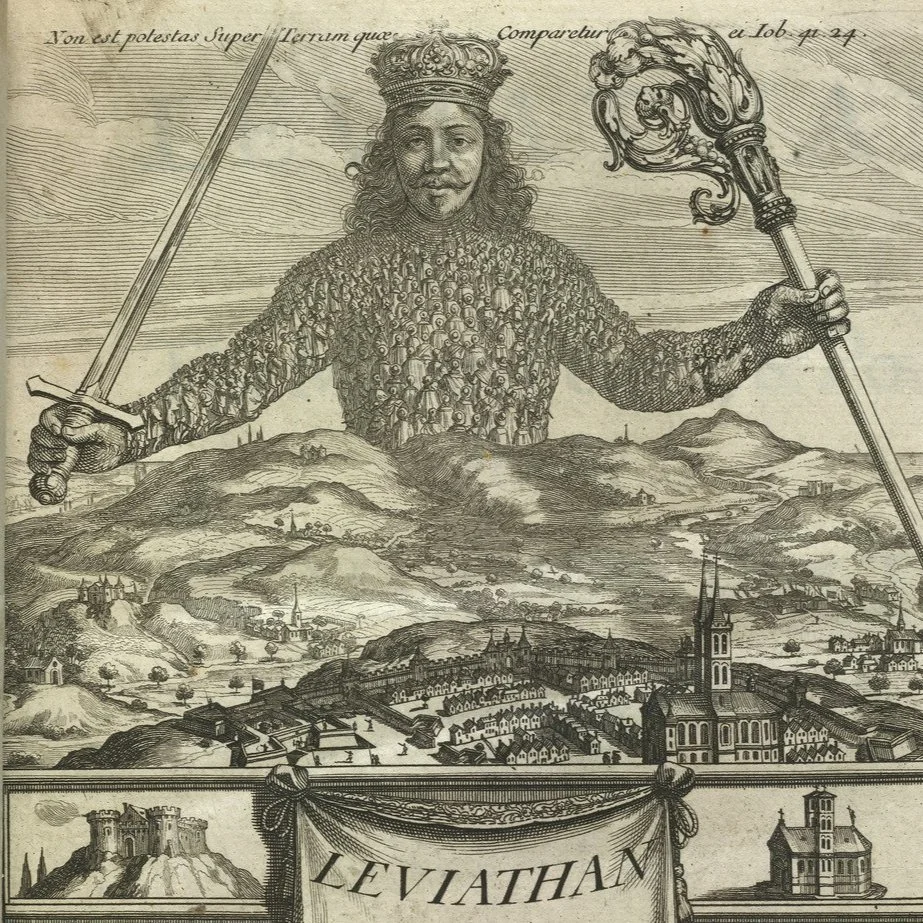
Image source: Wikimedia Commons
Artificial Intelligence, Instrumental Cause and Corporate Personhood: A Political Theology of Corporate Technology
Associate Professor Timothy D Peters
For the late Roman Catholic theologian, Ivan Illich, the origin of the modern understanding of tools and technology arose in the twelfth century, in tandem with the emergence in sacramental theology of an additional conceptualisation of causation: ‘instrumental cause’ as a subset of ‘efficient cause’. For Illich, what was significant and had not been recognisable before, was the concept of a tool as separate from the individual deploying it. This parallels the formalisation, during the same period, of the effectiveness of the sacraments, which Giorgio Agamben has detailed in his genealogy of office, as independent of the priest as ‘animate instrument’ performing them. A third emergent concept in this period alongside that of the tool and the animate instrument is the medieval figuring of corporate personhood as something independent (rather than a combination of) those that constitute a particular organisational body. This concurrent emergence of the notion of the artificiality of corporate personhood, functioning alongside the instrumentality of both tool and office, is crucial, I argue, to understanding the configuration of our current conditions in regards to law, technology and the human. As Susan Watson has highlighted, the modern debates regarding the nature of artificial intelligence and corporate personhood are not so much the generation of a radically different configuration but rather a straightforward extension of modern corporations (encompassing legal personhood and limited liability) that already operate as nearly autonomous systems to the exclusion or separation of the human. This article places both the arguments for and against the legal personhood of autonomous systems and the deployment of artificial intelligence as a tool that can support, contribute to or even displace tradition mechanisms of corporate governance within the theological genealogy of the instrument cause, vicarious power and corporate personhood. In doing so it develops a political theology of corporate technology that is particularly relevant to thinking through the potential effects of artificial intelligence on the constitutively vicarious exercise of power that corporate personhood enables.
Dr Timothy D Peters is an Associate Professor of Law at the School of Law and Society, University of the Sunshine Coast, an Adjunct Research Fellow at the Law Futures Centre, Griffith University and President of the Law, Literature and Humanities Association of Australasia. He is author of A Theological Jurisprudence of Speculative Cinema: Superheroes, Science Fictions and Fantasies of Modern Law (Edinburgh University Press, 2022), co-editor of the forthcoming Routledge Handbook of Cultural Legal Studies and the recipient of an Australian Research Council Discovery Early Career Researcher Award (project number DE200100881) funded by the Australian Government, examining ‘New Approaches to Corporate Legality: Beyond Neoliberal Governance’.

15 August 2023 - Strong Female Lead: Screening & Q&A with director Tosca Looby
Tuesday, 15 August at 4:00 - 5:30 pm (Screening will begin promptly at 4:05 pm). Q&A from 5:30 - 6:30 pm
Room G01
Melbourne Law School
Register here by Friday 10 AugustMLS students are invited to join us for a special screening of Strong Female Lead, a documentary examining Australia’s struggle with women and power when a strong female takes the lead. Made entirely from archival footage, the film documents the vitriolic, sexist attacks that characterised Julia Gillard’s time in office.
The screening will be followed by a Q&A with the director, Tosca Looby, who will talk about the challenges and rewards of archival filmmaking.
This special event is part of the Visualising Corporate Authority workshop, a collaboration between the Laureate Program in Global Corporations and International Law, the Law, Literature and Humanities Association of Australasia, and the SSHRC Insight Grant ‘Visualizing Development’.

15 & 16 August 2023 - Workshop: Visualising Corporate Authority: Archive, Representation, Imagination
Tuesday 15 and Wednesday 16 August, 2023
Melbourne Law School

Image credit Etsy.
From branding to trade marks and corporate seals, from representations of corporate personae to narratives of value and purpose, from corporate art collections to cinematic representations, this workshop will to explore the way in which corporate authority is symbolised, imagined, materialised, critiqued and instantiated through images, films and other visual forms.
The organisers invited proposals for individual papers on any aspect of visual forms and corporate authority – historical and contemporary, fictional and factual. Our goal is to find ways of understanding and making sense of corporate authority now and historically, through attending to its representation in and through visual forms.
By visual forms, we include film, television, comics and graphic novels, visual advertising, logos and branding, social media, memes, fine art, photography, illustration, documentaries and visual archives. Within ‘corporate authority’, we include ‘rightful’ corporate power, corporations and law, law and development, and Corporate (colonial/imperial) rule. Proposals that address both the visual and corporate authority were invited from scholars, film-makers and graduate students from any discipline.
Keynote speakers at the workshop will include Associate Professor Timothy D Peters (ARC DECRA Research Fellow, University of the Sunshine Coast) and Professor Ruth Buchanan (Osgoode Hall Law School, Toronto, Canada). The workshop will include a film screening of Strong Female Lead and a discussion on making films from archival footage with the film’s director, Tosca Looby on Tuesday evening (open to MLS students too. Please register here, and just choose the film).
Click here for the Program. - Please note - late Program change due to Illness. First Keynote cancelled. 11am start with Welcome, then Panel 1 as planned.
Workshop attendance is limited to those presenting and registered for the whole event, however Melbourne Law School colleagues and graduate students can attend individual sessions if they would like to. If you are based at the MLS (or currently visiting the MLS), please click here to register for the individual sessions, including the film screening, that you would like to attend.
The workshop is a collaboration between the Laureate Program in Global Corporations and International Law, the Law, Literature and Humanities Association of Australasia, and the SSHRC Insight Grant ‘Visualizing Development’. There will be no registration fee.
For those who can’t attend in Melbourne, a second workshop will be held in Toronto, Canada in October 2023 (call coming soon). You might also be interested in the ‘Cultural Legalities of Corporate Technologies’ sub-stream of the 2023 Law, Literature and Humanities Association of Australasia conference (11-14 December, Brisbane, Australia) - more information available here.


7 August 2023 - Critical Management Studies Seminar, University of Melbourne. André Dao.
Monday 7 August, 4pm - 5pm
William MacMahon Ball Theatre, Old Arts (Room 107) and Online (Register for the Zoom seminar here)
Crossroads to Tomorrow: IBM and Third World Dreams of Modernities
In 1980, International Business Machines (IBM) – then the world’s largest computer company – produced a short film, Crossroads to Tomorrow to promote its expansion into South East Asia. The film, narrated by Henry Fonda, presents IBM’s increasingly global reach as the natural outcome of technological (and, correspondingly, political and social) progress.
This paper offers a contrapuntal reading of Crossroads to Tomorrow – that is, following Edward Said, I read the film ‘with an effort to draw out, extend, give emphasis and voice to what is silent or marginally present or ideologically represented’. In particular, I am interested in drawing out the major and minor (or imperial and resistant) modes of modernity present in the film.
In the major mode, IBM constructs a South East Asia amenable to its own designs. It does so by smoothing out the heterogeneity of the region to produce a coherent object – one that is united, despite diversities of history, language and culture, by a common (and commonly backwards) place on a singular timeline: modernity. Simultaneously, IBM constructs itself in the mirror image of this object, as the ‘good corporation’ capable of facilitating the forward progress of South East Asia towards modernity. In this dual construction, the object – the Orient – cannot know or speak for itself; accordingly, IBM must speak for, and know, the Orient.
To uncover the minor mode, I turn to the film’s wider context, being that which has been forcibly excluded from view: at the time of the film’s production, the Third World was engaged in a huge struggle over multinational corporations, including IBM, and their travel southwards. Returning to these struggles, I try to pluralise the singular narrative of modernity presented in Crossroads to Tomorrow, with the aim of recovering forgotten – but still potent – Third World dreams of modernities.

13/14 July 2023 - PhD/Early Career Workshop - Heidelberg, Germany
Date and Time: 13-14 July 2023
Location: Max Planck Institute for Comparative Public Law and International Law
Heidelberg, Germany
Full Call for Papers and link for submission here. Closing date for proposals: 2 June.
Applicants informed by 13 June

Along the Waterfront of Dar-es Salaam, Chief Port of German East Africa. Library of Congress, https://www.loc.gov/pictures/resource/stereo.1s39975/
Like the Cambridge Workshop held in December, the purpose of this workshop is to begin to think together about how the research questions international lawyers ask might change if we started with the company/corporation. We invite participants to give a short, exploratory presentation which takes your current research, locates a company or corporation within it, and tells the story from that point. This is a local workshop designed to focus on scholars in and around Germany. We will hold others elsewhere. There is no registration fee, and food will be provided, but there is no general travel support available. There is no online/hybrid element at this workshop, though there are also online events conducted by the program.
This workshop is supported by the Laureate Program, the Max Planck- Cambridge Prize, and the Max Planck Institute for Comparative Public Law and International Law.

29 June 2023 - Law and History Workshop. Douglas Harris
Law and History Workshop with Douglas Harris (UBC)
29 June 2023, 1-2.30pm. Melbourne Law School, Room 223
Image: EP Thompson. Source: Wikimedia Commons.
EP Thompson was one of the most influential social historians of the twentieth century. His class-based analysis, which challenged conservative and Marxist interpretations alike, drew extensively on legal sources to capture the lived experiences of those seldom given voice in the historical record. In one of his richest essays, Thompson offers the concept of “moral economy” to explain and to understand the bread riots of eighteenth century England. What are the salient features of the moral economy? What work does it do for Thompson? Where does Thompson find evidence for it? Have you encountered similar or complementary concepts? Might the idea of a “moral economy” be useful in your work? MLS PhD students and faculty were invited to join Professor Doug Harris to participate in a reading and method session organised around this piece.

29 June 2023 - Condominium, Complexity, and the Corporation. Douglas Harris (Recording Available)
Speaker: Douglas Harris (UBC)
29 June 2023, 10:00 am, LPGCIL Research Meeting
Melbourne Law School, Room 1002 (access via Level 9 stairs)

Image credit: Wikimedia
The condominium form combines elements from land law and corporate law to produce individual parcels of land coupled with undivided shares of common property and set within a structure of local government. A massively successful innovation when measured by its proliferation, condominium now dominates residential new-build construction in cities around the world. As the number, scale, and complexity of condominium governments increase, is their particular corporate structure fit for purpose?

14 February, 2023 - Talk by Dr. Adil Hasan Khan - The University of Texas at Austin School of Law
Date and time: Tuesday February 14, 2023 4:00 pm–5:00 pm
Location: Eidman Jury Room (Room CCJ 2.310 of the University of Texas School of Law)
‘There is a widely perceived and ongoing “citizenship crisis” in contemporary India, as the Indian Supreme Court's authorization of a massive citizenship status verification process (NRC) in the state of Assam threatens to render stateless several million people, especially those belonging to religious and ethnic minority groups. At the same time, the Indian Citizenship Amendment Act (2019) provides expedited access to citizenship to members of select religious minority groups from neighboring states. Critical commentators have identified a double-standard in the invocation of the legal category of minority in these processes: While in the first instance, minority is a marker of a “lesser” citizenship status to which the state owes only limited, or no, obligations, in the second, it is a marker of a subject of rights protection notwithstanding a lack of formal status vis-à-vis the state.
In this talk, titled ‘An Imperial Genealogy of Minority as a Legal Category: The Making of a Crisis of Citizenship in South Asia’, Dr. Adil Hasan Khan will situate these treatments of minorities in the mid-19th century British imperial regimes of indirect rule, on one hand, and capitulations, on the other, to suggest that the approaches are less contradictory than they might seem. By illuminating the intimate historical relationship between the phenomenon of statelessness and the institution of and protection for minority’s, he aims to move beyond a critique of double-standards.’
For more information and to register, please see UT School of Law website.

8 February, 2023 - Roundtable: 'Conceptions of the Corporate Form: History, Theory & Consequence' - Melbourne Law School
Date and time: Wednesday 8 February 2023, 10.30am – 12.30 followed by lunch
Location: Melbourne Law School, 185 Pelham Street, Carlton
This event is scheduled to coincide with the Annual Meeting of the Society of Corporate Law Academics to be held from 5-7 February at Swinburne University, Melbourne.
As a side-event to the SCOLA conference, the Laureate Program in Global Corporations and International Law is hosting a roundtable discussion on the emergence and evolution of theoretical understandings of the corporate form. The roundtable will be facilitated by Professor Sundhya Pahuja and Dr Tim Connor who, together with Dr Adil Hasan Khan, are at the very early stages of producing a book on this topic. The book will likely take the form of a reader that will present and analyse extracts from key texts, curating them together with essays designed to set out and explain the plural conceptions of the corporate form, along with the context in which they emerged, examples of their application, and the differential consequences which flow from their application. Sundhya and Tim will share ideas emerging from their reading so far and will invite participants to join the conversation about their own observations relating to how different conceptions of the corporate form have influenced legal developments in their fields of research, what practical consequences have resulted from that influence, and what theoretical debates in relation to the corporate form continue to interest and challenge them. We anticipate the subsequent discussion will be lively, thought-provoking and a lot of fun.
All SCOLA members interested in participating in this roundtable should send an email expressing their interest to LP-GCIL@unimelb.edu.au before 23 December 2022.
In the email, if you could include a couple of lines about your work and its connection to the concerns of the roundtable, that would be great. Though if you want to come purely out of interest, you can just say that too.

15 - 16 December, 2022 - PhD/Early Career Workshop - Cambridge University
Date and time: 15 – 16 December 2022
Location: Lauterpacht Centre for International Law, Cambridge University
Organised by Professors Sundhya Pahuja (Melbourne, Laureate Program in Global Corporations and International Law) and Surabhi Ranganathan (Lauterpacht Centre for International Law (Cambridge))
The purpose of this workshop is to begin to think together about how the research questions international lawyers ask might change if we started with the company/corporation. We invite participants to give a short, exploratory presentation which takes your current research, locates a company or corporation within it, and tells the story from that point.
Proposals are invited for short presentations on any aspect of the intersection of international law and the corporation. The task is to offer a narrative in a way which centres on or starts with the company or corporation, rather than with other entities such as the state or international organisations, for instance. We encourage proposals from other disciplines that engage with this approach and research questions that centre international law and the corporation.
Presentations will be short. Early stage and exploratory work is welcome. PhD candidates and early career scholars are specifically invited to present. A number of PhD students from the University of Melbourne Law School will also present their work. A selection of senior scholars will be present and will engage with the presentations and the questions which arise. As well as Sundhya Pahuja and Surabhi Ranganathan, they will include Dan Danielsen (Northeastern), Jason Jackson (MIT), Grietje Baars (City), Shaun McVeigh (MLS) and Margaret Young (MLS).
This is a local workshop designed to focus on scholars based in the UK, alongside scholars from the Melbourne Law School. We plan to host future workshops in other regions of the world . There is no registration fee, and food over the two days will be provided, but there is no general travel support available. There is no online/hybrid element at this workshop, though future events may be online .
The workshop, Professor Pahuja’s visit, and the participation of MLS Faculty and PhD students are supported by the ARC Laureate Program in Global Corporations and International Law, the Lauterpacht Centre for International Law, a Cambridge Law Faculty - Melbourne Law School Partnership Grant, the Institute for International Law and the Humanities, and the Leverhulme Foundation.

Destroying_Chinese_war_junks,_by_E._Duncan_(1843).jpg (1040×681) (wikimedia.org)

2 November, 2022 - Research Seminar: 'Empire Comes Home: Researching the Global Corporation and International Law - Warwick Law School
On Wednesday 2 November 2022, Professor Sundhya Pahuja gave a research seminar at Warwick Law School. In the seminar, Professor Pahuja spoke about the intuition sparking the Laureate Research Program on Global Corporations and International Law, outlined the need for a new approach to respond to the rising power of global corporations, and sketched the lineaments of the research trajectory.
More information here

1 November, 2022 - PhD Roundtable - Warwick Law School
On Wednesday 1 November, Professor Sundhya Pahuja led a masterclass on ‘Asking Better Research Questions.’ The masterclass gave an in-depth commentary on the framing of on-going research projects and provided an excellent opportunity for PhD students to receive concrete advice on how to craft better research questions from Professor Pahuja, internationally recognised for her work on research methods.
More information here

Dr Christine Schwobel-Patel, Professor Illan Wall, Professor Sundhya Pahuja, Professor Celine Tan, Associate Professor Stephen Connelly.

21 October, 2022 - Seminar: 'Approaching the Global Corporation in International Law' - Cambridge University
Professor Sundhya Pahuja recently gave a Work-in-Progress Seminar at the Lauterpacht Centre for International Law.
In this informal seminar, Prof Pahuja outlined this project, mapped existing approaches, and described the key elements of her approach with the intention of starting a conversation with Lauterpacht Centre researchers, to launch future collaboration.
More information here.