
7 August 2026. PhD Roundtable. Doing legal history: the method problem(s)
with Professor Philip Stern and friends
PhD Roundtable
Friday 7 August 2026
In-person at Melbourne Law School, Victoria, Australia
Applications Close: 24 June 2026
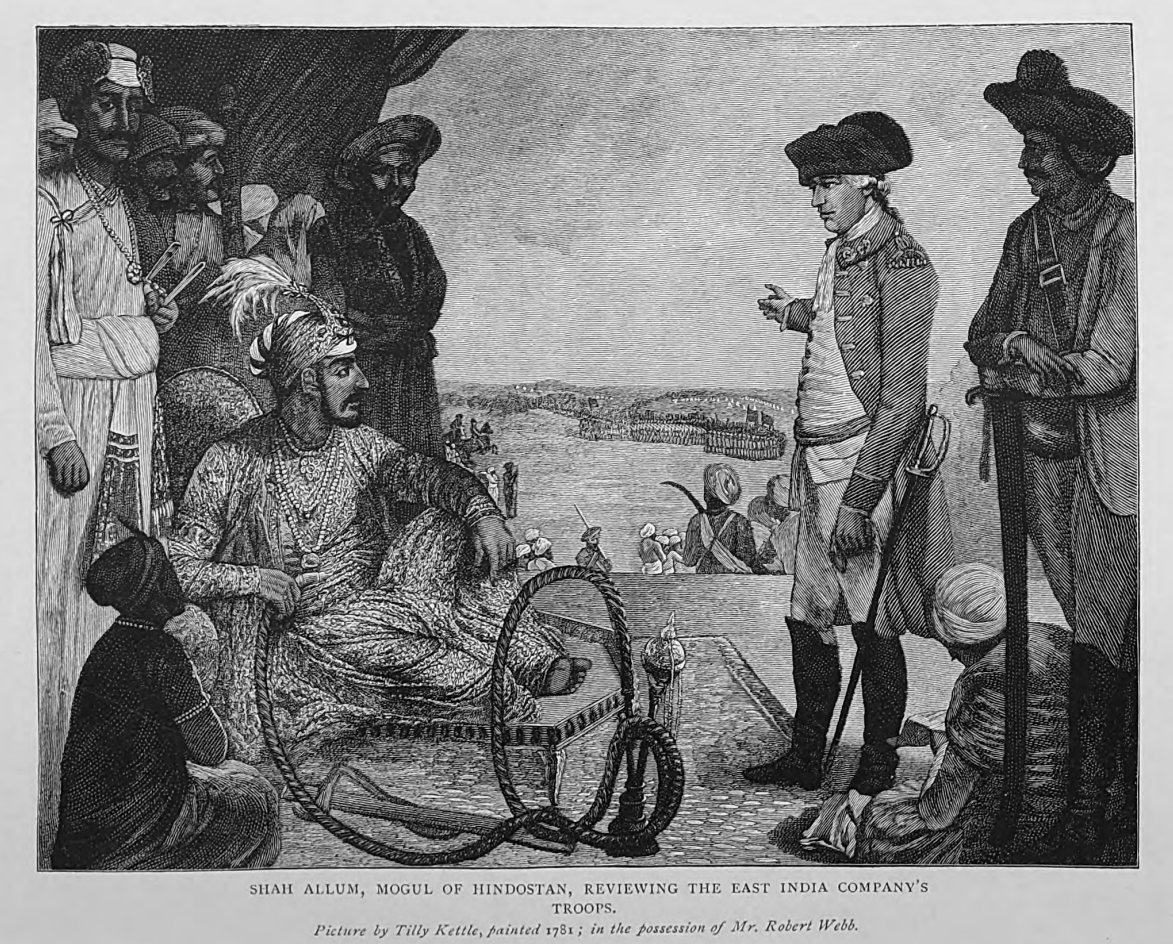
Source: A Short History of the English People: vol.IV (1894). By John Richard Green
What is legal history as an area, enterprise and tradition and what are the variety of ways of undertaking it? In 1975, U.S. scholar Robert Gordon distinguished between the internal legal historian, who ‘stays as much as possible within the box of distinctive appearing legal things’, and the external historian, who ‘writes about the interaction between the boxful of legal things and the wider society of which they are a part’. Drawing from treatises, equitable maxims, judgments, and legislative instruments, he claimed that internal legal historians were primarily concerned with tracing precedent or tracking doctrinal evolution, for a better understanding of law’s operation in the present. They took law as a distinctive body of knowledge, a discourse of its own, with an internal logic, largely insulated from the mess outside. External legal historians, on the other hand, studied the history of law via its ‘inputs’ and ‘outputs’ – in other words, the social, political, cultural and economic forces that shaped it and/or its effects upon society. The practice of making such a distinction is of course historically specific and lacks adequate attentiveness to the historical existence and practice of a plurality of laws, especially within European settler colonies. It ignores how the problem of method is not simply an epistemic question but also an ethical one, which pertains to how the historian of law takes responsibility for the conduct of their laws and for the quality of how they encounter/relate to the laws of others.
Undertaking legal history inevitably throws up these “method problems” and the challenges/benefits of interdisciplinary scholarship and collaboration. This workshop invites PhD students across the disciplines of law and history to examine and discuss different approaches to doing legal history - the questions asked, the theories applied, the sources analysed, the aims pursued and responsibilities taken up (or ignored).
Presentations will be short (5-10 minutes) to allow for more participants to engage with Professors Philip Stern, Zoë Laidlaw, Sundhya Pahuja, Diane Kirkby and several of our collaborators.
Note: This event is directed at PhD students in Melbourne (all universities). No funding is available to support attendance.
Application Process
Registration and abstract submission: You must register to attend the Roundtable and submit your abstract separately via the two links below.
Abstract focus: Address how your work is responding to the method problem(s)
Abstract length: Not more than 500 words (excluding headers)
Name your abstract file: (YOUR LAST NAME IN CAPS)_Doing legal history_Abstract
At the start of your abstract, list your title, your name (last name capitalised), discipline, institutional affiliation, and contact details (email, WhatsApp)
Email Subject header: Doing legal history__abstract submission
Registration and abstract submission links:
Register here
Submit your abstract here
Application closes: 24 June 2026
Outcome of Your Application Advised by 6 July 2026
This Roundtable will be held at Melbourne Law School from 9 am to 5 pm
This event is presented as part of the Miegunyah Distinguished Visiting Fellowship Program. The program invites internationally distinguished scholars for an extended visit to the University of Melbourne, enriching the University’s academic, intellectual and cultural life. The program is made possible through the generous support of the Russell and Mab Grimwade Miegunyah Fund.